
Skip to content

Lessons from the farmers’ market

2012 May 21
by Carol Davis

After selling at my very first farmers’ market on Saturday, I came away with a lot of lessons learned.

First off, I did okay selling my homegrown heirloom tomatoes, peppers, cucumbers, and herbs. Didn’t sell as much as I would have liked, and brought home more plants than I wanted, but friends who are more experienced at this than I say I did very well on my first day out.

As I looked around at everyone setting up their booths around me, it was easy to figure out who was experienced at selling in venues like this. We all had identical spaces — a 10×10 tent with a long table and two chairs — but some of those spaces were arranged and decorated in a way that were very inviting. The only thing special about my booth was a beautiful banner that a friend designed for me.

The plants did not, as I expected, sell themselves. So there will be a few changes and improvements when I show up for the market next week.

Better signage. Thank heavens for a friend who ran and bought a dry erase board when we saw that most other people had them. I was able to list exactly what I was selling, instead of making the customers guess. Also, many customers didn’t understand what heirloom plants are, but were very interested once they asked. I’ll create something to explain heirlooms and why they’re important.

More variety. Timing was a challenge. A lot of people around here have their gardens in, so many weren’t looking to add to it, even if I offered something different. I’ll continue offering vegetables and herbs for those who want to take advantage of our long growing season and have a late garden, but I’m going to turn the focus to flowers and decorative plants.

More display space. I need to bring more tables to display my plants. Also, arranging tables in particular configurations can bring customers further into your booth space so they can see more of your product.

Interesting decorations. Watering cans, wind chimes, pretty pots — all of these can create an atmosphere that says, “If you’re interested in gardening, you need to come to this booth.”

It was just me and my plants — and a great banner.

So, I’ll return to the market next Saturday a little wiser and a little more ready. With my newfound knowledge and a little luck, maybe I’ll be bringing fewer plants home.


Celebrating a year of my gardening community

2012 May 10
by Carol Davis

When I launched The Imperfect Gardener blog and its accompanying Facebook page, I had no idea of the wonderful community of gardeners that I was getting ready to join and how much I would learn. It is so fun!

It’s been exactly one year today — happy birthday, The Imperfect Gardener! — and I continue to be amazed at the camaraderie, helpfulness, encouragement, and kindness that my fellow gardeners show to me and each other.

We keep each other in our thoughts during good and bad times — the arrival of a new baby (human and animal) or the heartbreaking loss of much-loved poultry to predators. When I asked for advice on planting a cottage garden, I got all kinds of helpful suggestions. You understand my greenhouse obsession; Facebook friend Valerie Crites Hawes even shared the unique and very lovely greenhouse and garden shed that her husband built for her from recycled materials.

And the amount of knowledge out there is astounding. I’ve learned things that I didn’t even realize I needed to know.

Blogs and Facebook pages that I have discovered and “liked” over the year have provide fun, helpful reading every time I visit them.

From Pollination Station, I’ve learned about birds, butterflies, bats, and bees and from 422 Grow, I’ve learned some excellent gardening techniques.

Seasonal Wisdom interestingly offers a little bit of everything and I always find good  food ideas and much more from The Sustainable Sweet and Savory Gourmet.

Want to see incredibly beautiful photography? Check out Garden Gossip and Our Little Acre.

I’ve happily followed the farming adventures of Salt of the Earth Urban Farm and been well educated by the outstanding information put out there by Handpicked Nation.

There are many others, of course, and there will be more gardening friends to meet in the year, and years, to come. What a great, great community. I’m so happy that I  joined in.


Selling at a farmers’ market!

2012 April 22
by Carol Davis

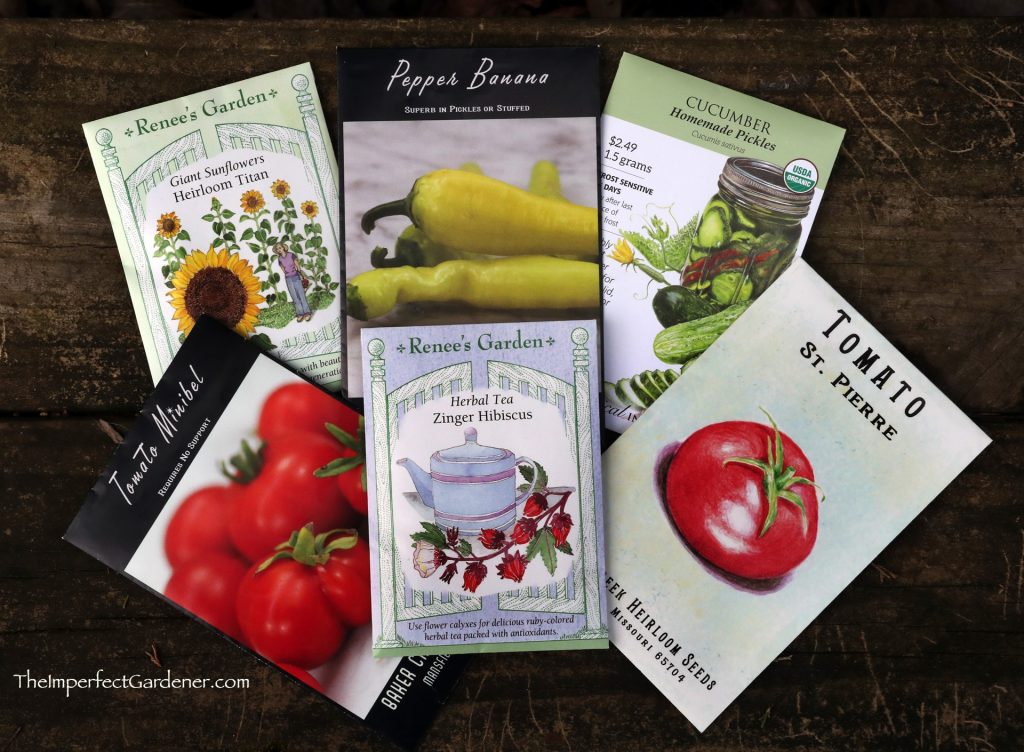
These seeds from my Christmas stocking "seeded" my new business venture.

Last Christmas, I pulled a wrapped package from my stocking and opened a small collection of heirloom seeds.  It contained a couple kinds of tomatoes, peppers, squash, cucumbers and more.

“That’s to get you started on your seedling business,” my mom said.

What a vote of confidence!

She knew that I’d wanted to try selling at a farmers’ market for some time. I love to start seeds and grow seedlings and fill up my greenhouse, but I can’t possibly manage all of that in my garden. So I give the extras away to my friends for their gardens.

Why, I thought to myself, shouldn’t I take the next step and actually sell my plants? That would provide me with a logical reason to grow so many, and I could make a little money to cover the cost for my seed obsession. Plus, I love the festive atmosphere of a farmers’ market, with all the vendors and customers; everybody is so happy to be there!

So after talking to a couple market managers, I’m taking the plunge, and in less than a month, I’ll be a vendor for the very first time, specializing in heirloom vegetables, herbs, and flowers. And if my flower gardens grow like I’m hoping, I’ll be selling cut flower bouquets later in the summer. That’s the plan, anyway.

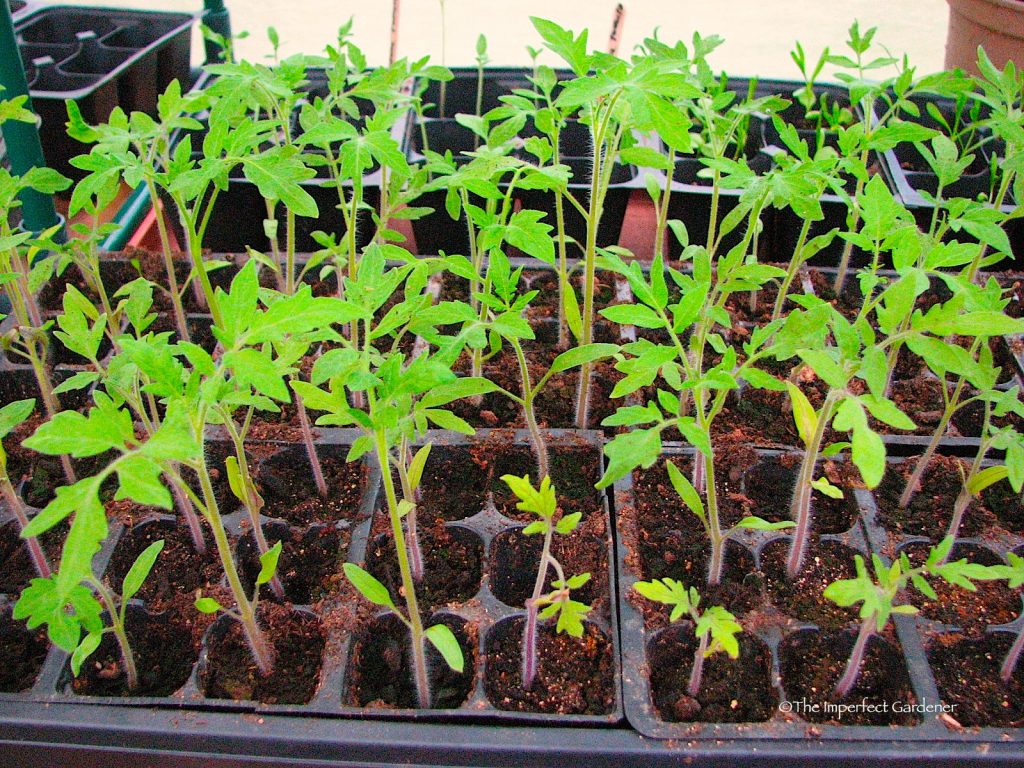
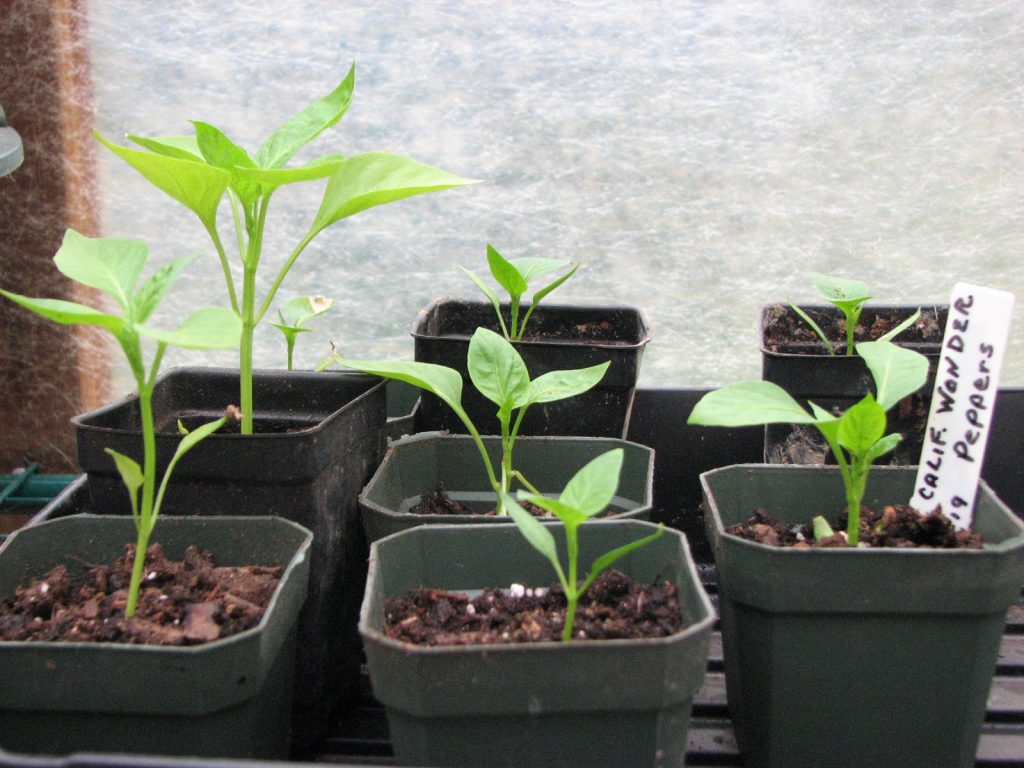
So for now, those Christmas seeds, along with many, many more, are germinating and growing in my greenhouse on heat mats and under grow lights, getting ready for our farmers’ market debut.

Fertilizing your seedlings

2012 April 10
by Carol Davis

These cucumber seedlings are receiving half-strength fertilizer.

By now, if you’ve started some seeds indoors, your seedlings have popped up and are growing every day. It won’t be long until you’ll need to provide them with some extra nutrients to stay healthy and thriving.

You most likely used a commercial seed-starting mix to start your seeds, which is a soil-less mix that creates ideal germinating and growing conditions for seedlings by keeping them moist and preventing the soil from compacting.

These mixes, however, generally contain no nutrients. That’s because they don’t need to. Each seed contains all the nutrients it needs to germinate, grow, and produce its first set of leaves.

But when the tiny plant sprouts its second set of leaves — called “true leaves” — then it’s time to start providing some nutrients.

Your seedlings are tender, so you don’t want to feed them with a full-strength fertilizer, which will burn their tiny, fragile roots. Instead, dilute a liquid, water-soluble fertilizer to half strength and water with that once a week to give them the nutrients they need to continue to grow.  Continue this for about a month, and then feed them every 10 days or so with fertilizer at regular strength.


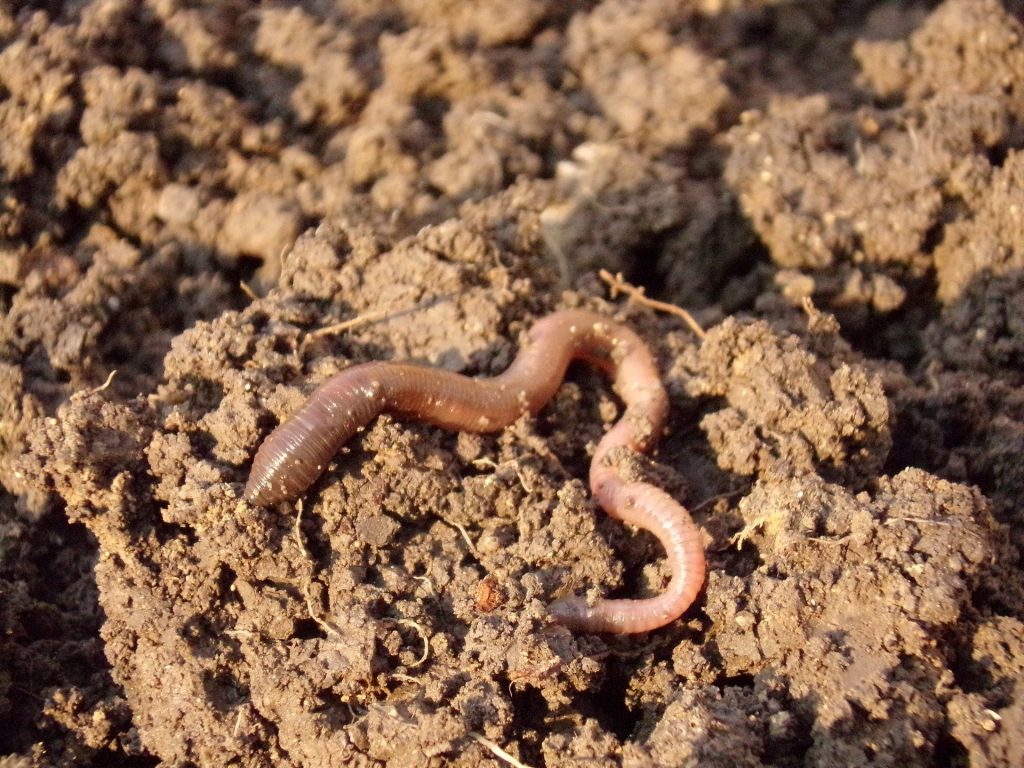
Note: Some seed-starting mixes, like my own homemade recipe (see it at http://bit.ly/wxCRVQ), have worm castings in the recipe, so there is some nutrient value to last a little while, but not enough to keep the seedling nourished indefinitely.


5 questions for … Jodi Torpey — Plant a Row for the Hungry

2012 March 31
by Carol Davis

This is the first in an occasional series called “5 questions for …” in which we’ll ask five questions of gardeners and others who are experts in their fields.

Jodi Torpey, right, makes a food donation to Friends of Saint Andrew in Denver./Photo courtesy of Jodi Torpey


Jodi Torpey, of Denver, a master gardener, blogger (WesternGardeners.com), and author of the book,The Colorado Gardener’s Companion: An Insider’s Guide to Gardening in the Centennial State, along with other e-books, started a local campaign in Denver to Plant a Row for the Hungry, which is part of a national project that encourages growers to plant a little extra in their garden to donate to local food pantries and similar agencies.

1. How can a home gardener become involved with Plant a Row or any similar program?

Plant a Row for the Hungry is based on the time-honored tradition of gardeners sharing their harvest with others. All it takes is a desire to plant a few extra vegetable or herb plants in the garden and then donate the produce to a local food bank, church pantry, or soup kitchen. Individual gardeners can participate on their own or partner with garden clubs, community gardens, or church groups in this growing-and-giving effort. If there isn’t already a program, gardeners can start one.

2. How does a gardener determine what, specifically, to plant? (Do these organizations provide guidelines?)

Just plant vegetables that are easy to grow, will travel well, and are good keepers, like broccoli, cabbage, carrots, peas, green beans, tomatoes, sweet peppers, eggplants, summer squash (including zucchini), winter squash, onions, beets, apples, pears — and even herbs.

3. Once it’s ready for harvest, where does the gardener take the produce?

For the Denver Plant a Row effort, we partner with Food Bank of the Rockies because the agency has many drop-off sites in the Metro area. The Ample Harvest website also has a database of food agencies (http://www.ampleharvest.org/) or gardeners can call the Garden Writers Association Plant a Row program at 877-492-2727 for more information.

4. Give us an idea of how much Plant a Row has produced over, say, the last year.

During the 2011 gardening season, Denver gardeners donated 1,220 pounds of produce. Since the program started in 1995, gardeners have donated more than 16 million pounds of fresh vegetables, herbs, and fruit to the national effort.

5. How great is the need out there for such a program?

I think everyone understands the need is greater now than in previous years. Over 49 million Americans live in households that experience hunger or the risk of hunger daily, so the need for fresh fruits and vegetables never goes away. Millions of people depend on community non-profit organizations, churches and food service agencies to help feed their hungry families on a daily basis.